


If you were riding as a passenger in a car when a Florida accident occurred, you probably did nothing to cause it. This single fact shapes everything about your case. Passengers often have a better path to compensation than drivers, and there are often several places to collect from. At Hutch Firm, most passenger cases we see begin with someone assuming they have no claim whatsoever. They usually have several claims.
Your Own PIP Coverage Usually Pays First
Florida is a no-fault state. This means that, under the state’s no-fault law, each driver must have personal injury protection (PIP) insurance. PIP covers you regardless of who was at fault in an accident. It pays up to 80% of your medical bills and up to 60% of lost wages, with a maximum limit of $10,000.
As a passenger, the PIP policy that applies depends on your specific situation:
- If you own a car, your own PIP insurance will continue to cover you even when you are a passenger in another vehicle.
- If you reside with a relative who has their own PIP coverage, their policy may extend to cover you as well.
- However, if you do not have your own PIP or household coverage, the policy of the vehicle you were riding will apply.
Two deadlines quietly control this coverage. You have to get medical treatment within 14 days of the crash, or PIP will pay nothing at all. And without a diagnosed emergency medical condition, your benefits are capped at $2,500 instead of the full $10,000.
You Can File Against the At-Fault Driver – or Both
PIP rarely covers serious injuries in full. If it runs out, you can sue the driver who caused the accident. This is where passengers come in: you don’t need to choose sides.
If two drivers collide, you can file a claim against either or both of them. You weren’t at the wheel. Florida’s modified comparative negligence law bars anyone more than 50% from recovering anything, but this almost never happens to a passenger. You didn’t steer, brake or signal. The responsibility lies with the drivers and you can recover from whoever was responsible, in proportion to their share.
When You Can Sue for Pain and Suffering
No-fault keeps most minor claims out of court. To go beyond PIP and claim for pain and suffering, your injury must cross Florida’s serious injury threshold: permanent injury, significant scarring or disfigurement, loss of a vital bodily function or death.
Broken bones, surgeries, nerve damage, and traumatic brain injuries often qualify for compensation. A soft-tissue strain that fully heals does not usually qualify. This is where the true value of a passenger’s claim lies, and where insurers work hardest to label your injury as minor.
The Clock Is Shorter Than It Used to Be
Florida cut its deadline. For accidents that occur on or after March 24, 2023, there are two years from the date of the accident to file a claim under the statute of limitations. Previously, it was four. Evidence fades, witnesses move, and no insurance company is going to remind you that the window is closing.
Talk to Hutch Firm Before You Talk to the Insurance Company
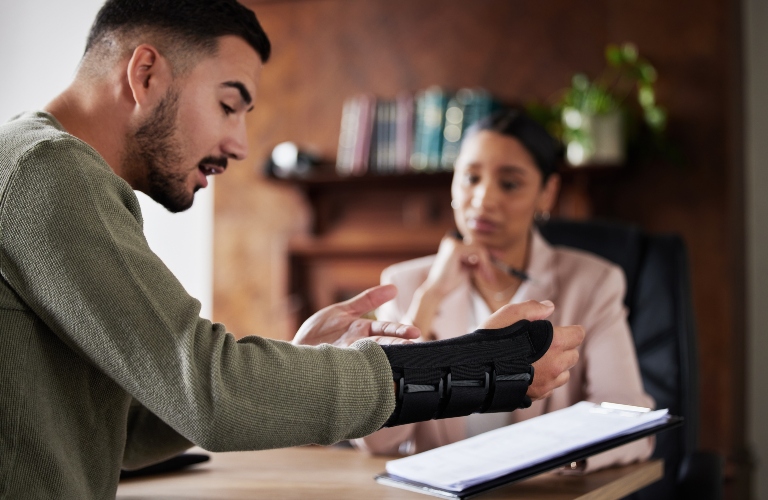
A passenger with a broken wrist and a stack of emergency room bills often has three or four possible sources of recovery, but no clear idea about which to pursue first. This is not the time to make decisions while an adjustor is on the phone offering a quick fix. Before signing anything or giving a recorded statement, allow Hutch Firm to map out every policy that owes you money and review each one. Contact us to find out how much your claim is worth.