

In Florida, falling on someone else’s property is not enough to win a case. You have to prove that the property owner was aware of the hazard or should have been. This single rule determines more slip and fall claims than any other factor, and it means that evidence from the first hour after your fall matters more than anything that happens afterwards.
The Law Puts the Burden on You, Not the Property Owner
Under Florida Statute § 768.0755, a person injured by a transient foreign substance in a business must prove that the establishment had actual or constructive knowledge of the hazard and failed to correct it. A spilled drink, wet floor, loose grape rolling into an aisle – the substance must be temporary and unusual for the space, not a permanent fixture like a step or ramp. Actual knowledge is simple: an employee sees the spill and walks past it. Constructive knowledge is where most cases are won or lost.
What Constructive Knowledge Actually Means
Florida law allows you to prove constructive knowledge in two ways. Either the hazard has existed long enough for reasonable inspection to have caught it, or the same type of hazard occurs regularly enough that businesses should expect it and take precautions against it. Neither is easy to prove without documentation. That’s why attorneys move quickly. Surveillance footage from most commercial systems is overwritten within days or hours, so preservation letters often go out before medical bills even arrive.
Courts have leaned harder on this notice requirement in recent years, not softer. A fall that might have been a straightforward case a decade ago could stall out entirely now if nobody had documented how long the hazard had been there before you stepped on it.
The Evidence That Actually Moves a Case
Some evidence carries far more weight than other evidence:
- Photos and video taken at the scene with a timestamp before anyone cleans up or moves the hazard.
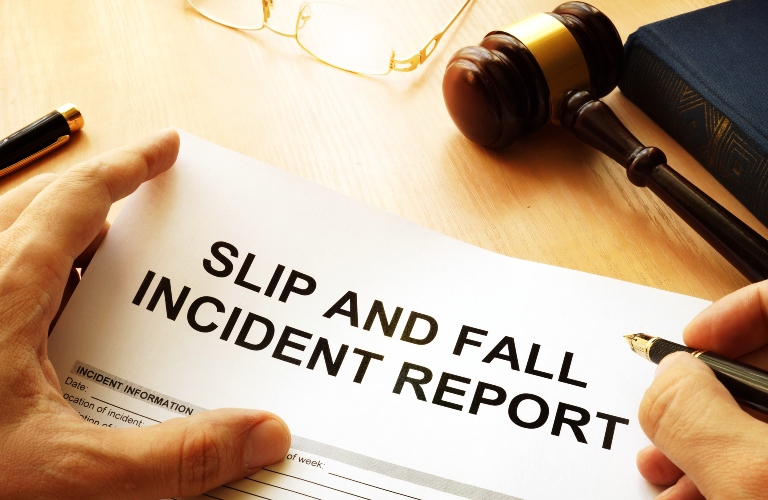
- The incident report that the store manager must complete. Ask for a copy before leaving, as stores don’t always provide one voluntarily.
- Surveillance footage, which requires a written request sent promptly before routine deletion runs.
- Witness statements, especially from customers or employees who saw the hazard before, but these tend to disappear with people’s memories in weeks.
- Maintenance and inspection logs that show whether the store followed its own safety procedures that day.
- Medical records connecting your injury directly and immediately to the fall.
None of these things happen by accident. They must be gathered purposefully, often within a few days.
Comparative Fault Can Cut Your Case to Zero
Florida shifted to a modified comparative negligence system in 2023. Under Florida Statute § 768.81, if you are found more than 50% at fault for your own accident, you will recover nothing. Not even a reduced amount. Absolutely nothing. Insurance adjusters are aware of this and take advantage of it.
They will argue that the hazard was obvious and open, or that you were distracted by your phone while walking. Refuting this argument usually involves the same evidence mentioned above: lighting conditions, warning signs, and how long the hazard has actually been there.
The Clock Is Shorter Than It Used to Be
You may think you have more time than you actually have. The Florida statute now gives most victims of injury two years from the date of the accident to file a lawsuit, compared to four years before the 2023 reform. This may seem like a long time, but once evidence starts to disappear and memories fade, it doesn’t seem so long.
Get the Right Attorney, Not Just Any Attorney
Winning a slip-and-fall case in Florida requires more than just knowing the statutes. It requires attorneys who understand orthopedics, radiology, and physics well enough to explain exactly how your body was injured and why the hazard caused it. Every law firm claims to have experienced attorneys, but not every firm can actually take you through the medical and mechanical aspects of your fall during the same conversation.
At Hutch Firm, we handle evidence, insurance companies, and medical providers so you can focus on healing. You have a case. Ask tough questions before choosing who to handle it. Contact us today to schedule a consultation.